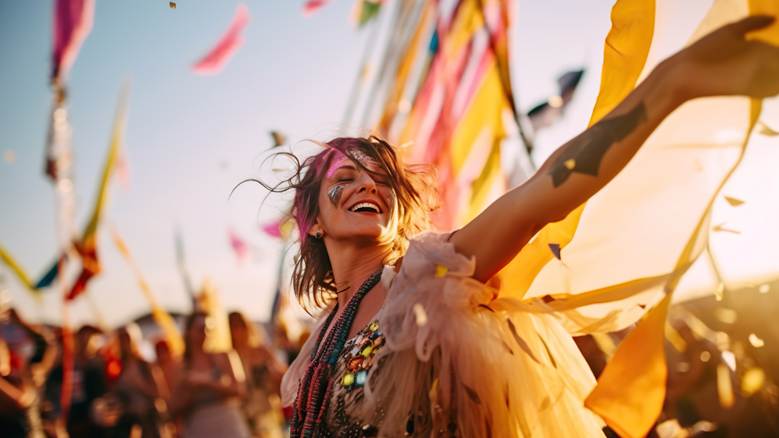
Music festivals have a different kind of energy that can only be experienced when you go there yourself. An energy that doesn’t rely on marketing lines, dramatic visuals, or lofty promises. It’s the kind of environment people step into and instantly recognize: a place where strangers behave like familiar faces, where shared enthusiasm rises faster than the stage lights, and where the usual social rules pause long enough for people to simply exist, freely, around others who share their rhythm.
This feeling isn’t accidental. It’s engineered by culture, behavior, and the subtle architecture of human connection, something Nathan Showman Ranger, has long appreciated through his own interest in the communal side of music, movement, and shared experiences.
People don’t usually talk seriously about the sense of belonging that comes up at festivals, but it gets that kind of respect. When you see how people interact with each other, without acting a certain way or thinking about who is more important, you’re starting to see how festival culture quietly shows what a community is like when people participate with desire instead of obligation.
Shared Passion Creates Immediate Social Glue
Most social spaces require time to warm up. Festivals do not. Thousands gather with one common objective: to feel something together. When people meet in a place where their interests are aligned from the start, the barriers that typically slow connection simply don’t have time to form.
The line has a lot of power. Seeing someone wearing the same artist’s merch makes you talk right away. When a stranger gives you a water bottle, it doesn’t feel like they’re getting in your business; it feels like they’re helping. You can even create synchrony by doing little things, like following the crowd’s timing during a beat drop. These build trust faster than any small talk could.
You take part in a shared emotional environment, which on its own turns into a sense of belonging. Furthermore, the sense of belonging frequently transcends the festival grounds and manifests itself in other ways, such as friendships, group outings, customs, or a feeling of being a part of something greater than your own experience.
Spaces That Encourage Expression Without Judgment
One of the most striking aspects of festivals is freedom which people express themselves. Costumes, glitter, neon, intricate outfits, or simply the confidence to dance without restraint – these are expressions that often feel out of place in everyday settings.
Festivals shift that balance.
When the setting honors uniqueness, people feel like they can be themselves – often for the first time in a long time – without seeking approval. Getting this kind of social approval really affects the mind. When you feel safe expressing your thoughts and feelings, you are more likely to make deep bonds with others.
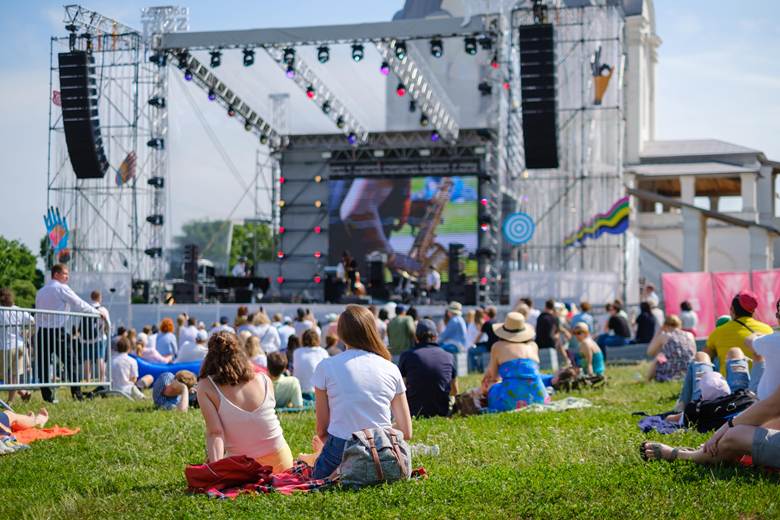
Rituals That Strengthen Connection
People underestimate the significance of rituals, yet they’re the backbone of community. Festivals are full of them:
- Meeting the same group at the same stage each year
- Holding up signs for specific moments
- Singing choruses that everyone knows
- Forming circles before a headliner takes the stage
These aren’t random behaviors; in fact, they’re collective rituals that reinforce belonging.
They build memory, anticipation, and shared identity. Even if you’re attending alone, you become part of the ritual simply by participating.
Temporary Worlds That Encourage Cooperation
Festivals are like small societies, and people know they’ll be gone soon; they act differently. Since everyone knows the event will be over soon, people are encouraged to take care of the earth and each other.
Look closely and you’ll see:
- Strangers forming protective semi-circles when someone drops something
- People linking arms to stabilize the crowd
- Volunteers and attendees cleaning up after sets
- Individuals sharing supplies without needing to be asked
These are small gestures, but they transform space. Cooperation becomes the norm rather than the exception, and when people collectively choose collaboration, community forms naturally.
The Role of Music in Human Connection
Music has always been a way for people to feel like they belong. It sets people’s movements in sync, controls their emotions, and makes people in beat with each other. Neuroscientists have known for a long time that making music with other people or listening to music together can activate parts of the brain that are linked to emotion and bonding.
This effect is stronger at events.
Bass lines, melodies, transitions, and build-ups create moments when the crowd reacts as one organism. That collective reaction, even something as simple as everyone chanting a lyric, builds a sense of unity that feels electric and grounding at the same time.
Why These Connections Matter Long After the Music Stops
The community built at events doesn’t go away when the stages aren’t lit up anymore. People often say that these events help them feel more grounded and even motivated. They remember what it was like to be in a place where people worked together, where people could say what they wanted, where strangers were nice, and where a shared love of something could overcome shyness.
These environments serve as a reminder that belonging doesn’t require perfection or conformity – it requires presence, participation, and shared moments.